
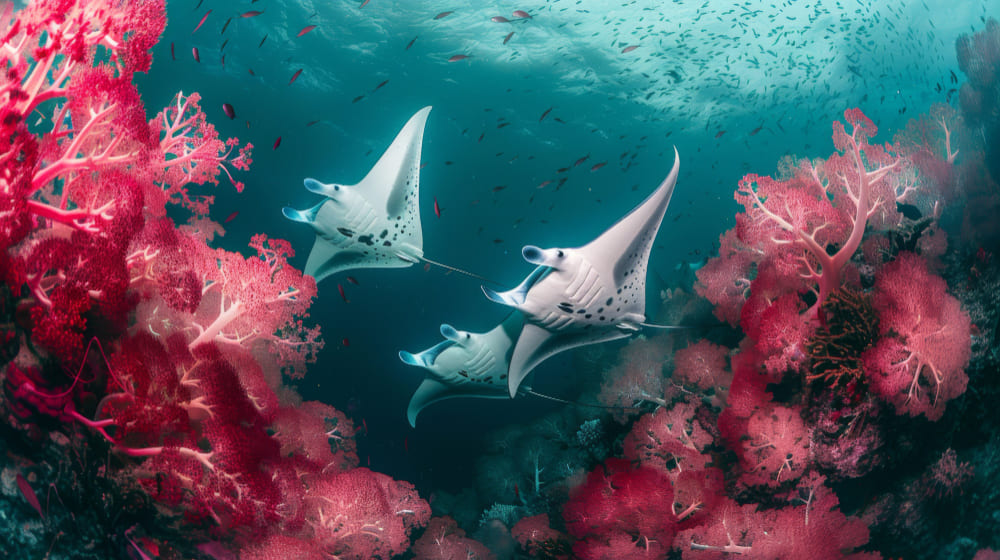
Some places look amazing online and then feel forgettable once you’re back home. The Maldives doesn’t do that. What people usually remember isn’t the resort or the food, but the time they spent in the water while snorkeling with Manta Ray. Floating there, watching a manta ray swim past, moving so calmly it didn’t even seem real. It’s one of those moments that stays with you without trying to.
That feeling doesn’t happen by accident. The Maldives is set up perfectly for it.
1. The Ocean Currents Do Most of the Work
The Maldives is made up of coral atolls rather than one large landmass. Between these atolls are natural channels where currents move in and out daily. Those currents carry plankton, and plankton is exactly what manta rays follow.
This is why sightings aren’t random here. You’re not chasing luck. You’re visiting places mantas already rely on for feeding and cleaning. That’s a big reason why snorkeling in Maldives often feels more predictable than in other destinations where mantas are only occasional visitors.
You’ll notice:
- Mantas returning to the same areas repeatedly
- Calm circling behavior instead of quick fly-bys
- Other marine life gathering in the same spots
It feels natural, not staged.
2. Shallow Reefs Make Things Easier Than You Expect
You don’t need to be great at snorkeling or go into deep water. A lot of the time, mantas show up near the reef or inside the lagoon, where the water isn’t very deep and you can see clearly.
This is where snorkeling the barrier reef really shines. You can float comfortably while mantas pass beneath, sometimes stopping at cleaning stations where small fish do their work. There’s no rush. No pressure to keep moving.
For people who are new to snorkeling, this setup removes a lot of stress and lets you focus on what’s happening below you instead.
3. Night Snorkeling Changes Everything
Daytime encounters are impressive, but a manta ray night snorkel feels completely different. Lights placed near the surface attract plankton, which then brings the mantas close.
In the dark, every movement feels amplified. You’re not distracted by scenery or distance. You’re just there, floating, watching huge shapes glide through light and shadow.
The second manta ray night snorkel, which travelers experience, becomes a more powerful experience because they learn to take time and observe the environment instead of attempting to capture everything.
4. Rules That Actually Protect the Experience
One reason snorkeling with Manta Ray remains special in the Maldives is how seriously conservation rules are taken. Boats keep their distance. Snorkelers are briefed properly. Touching and crowding aren’t tolerated.
These rules don’t take away from the experience — they protect it. Mantas that aren’t stressed behave naturally, and that’s when encounters feel real.
Good guides usually remind people to:
- Stay still instead of swimming toward mantas
- Avoid blocking their path
- Keep movements slow and predictable
Those small habits change everything.
5. Conditions Stay Comfortable Most of the Year
Warm water, good visibility, and steady conditions make a huge difference. You’re not battling cold temperatures or murky views. Most days, you can see mantas coming from a distance, which makes snorkeling with Manta Ray feel calm rather than surprising.
Snorkeling the barrier reef isn’t only about looking for mantas. You’re in the water and suddenly there’s a turtle nearby, then fish everywhere, sometimes even a reef shark further out. One swim ends up feeling like a few different experiences at once.
This consistency is another reason snorkeling in Maldives works so well for people who don’t want to gamble their trip on perfect timing.
Why People Remember It So Clearly?
What sticks isn’t the size of the manta, even though it’s impressive. It’s the stillness. The moment when you stop kicking, stop adjusting your mask, and just float.
That’s when snorkeling with Manta Ray stops feeling like an activity and starts feeling like a memory you’ll replay years later without trying.
Maldives keeps things calm and unhurried. There’s no pushing through crowds or rushing the experience. You’re simply given the space to be present with the ocean, which often makes the experience feel far more meaningful.